Written by: Betty Tian
I’ve played Don’t Starve Together (DST) for a long time, and it has stayed one of the few survival games I always come back to. It’s messy, stressful, funny, and sometimes downright unfair, but that mixture is exactly what makes it so addicting. After spending so many hours in this world, getting frozen, starving, burned, and beaten by giants more times than I can count, I’ve come to realize that DST shines the brightest not when you play alone, but when you survive together.
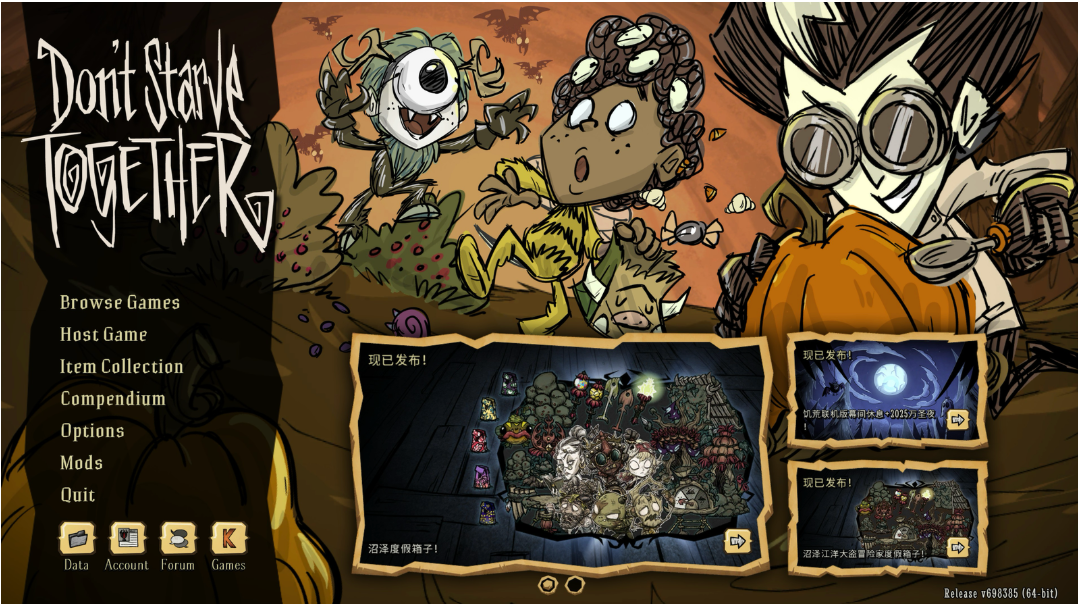
Don’t starve together startup screen
Klei’s Don’t Starve Together is one of those games where, once you experience the multiplayer mode, it becomes very hard to go back to the single-player version. The solo mode is good, but doing everything alone can be exhausting, and the pressure builds up over time. The real charm of DST is how it turns this harsh world into a shared playground of chaos, accidents, surprises, and funny disasters. Everything becomes a group experience, which is why DST offers much more fun and depth than the original single-player game.
The core survival loop is still the same: gather resources during the day, build a fire at night, manage hunger and sanity, and prepare for the seasons. But in DST, this loop feels totally different because you are not doing everything on your own. Players naturally take on different roles, someone fights monsters, someone farms, someone explores, and someone handles crafting and supplies. Of course, teamwork doesn’t mean the game becomes easier. Winter can still freeze the whole team to death, and seasonal bosses can still destroy your base in seconds. But now you are dealing not only with the environment, but also with a world full of other players. Some teammates can carry the whole team, while others can burn down an entire forest by accident. You never know if your teammates are helping you or creating a second disaster.
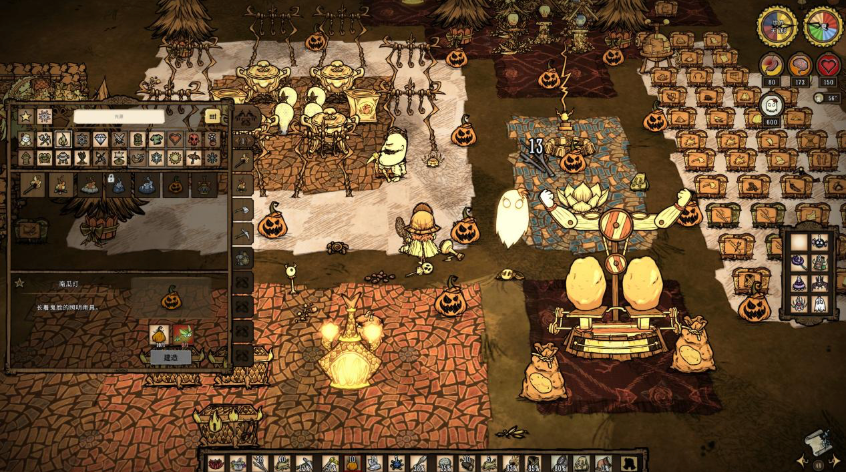
This is the screenshot of author playing DST with her friend.
The psychological journey of DST players also changes as the game progresses. At the beginning, the goal is simple: just stay alive. As long as you don’t starve, don’t freeze, have a fire at night, and avoid being chased by shadow creatures, that already counts as a small success.
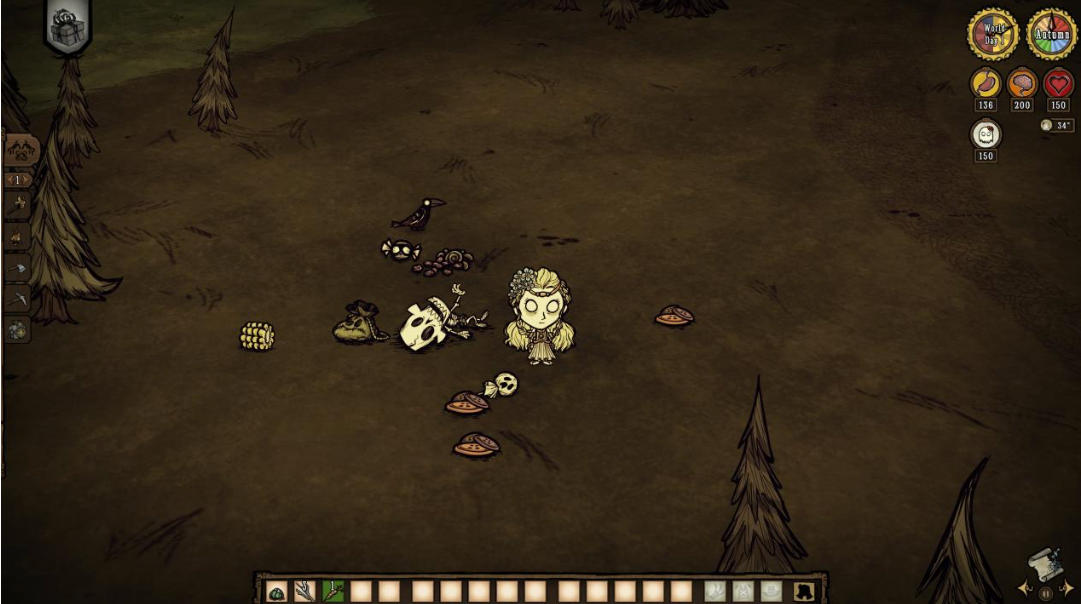
The remains left behind when a player dies, try your best not to become one!
Once you survive the early panic, you start trying to keep your base from collapsing. Players begin to build basic structures, set up cooking stations, store food, and prepare for seasonal changes. Later in the game comes the “empire-building stage,” where players build roads, farms, outposts, and fight seasonal bosses. Slowly, the world changes from a random mess into a place you can control.
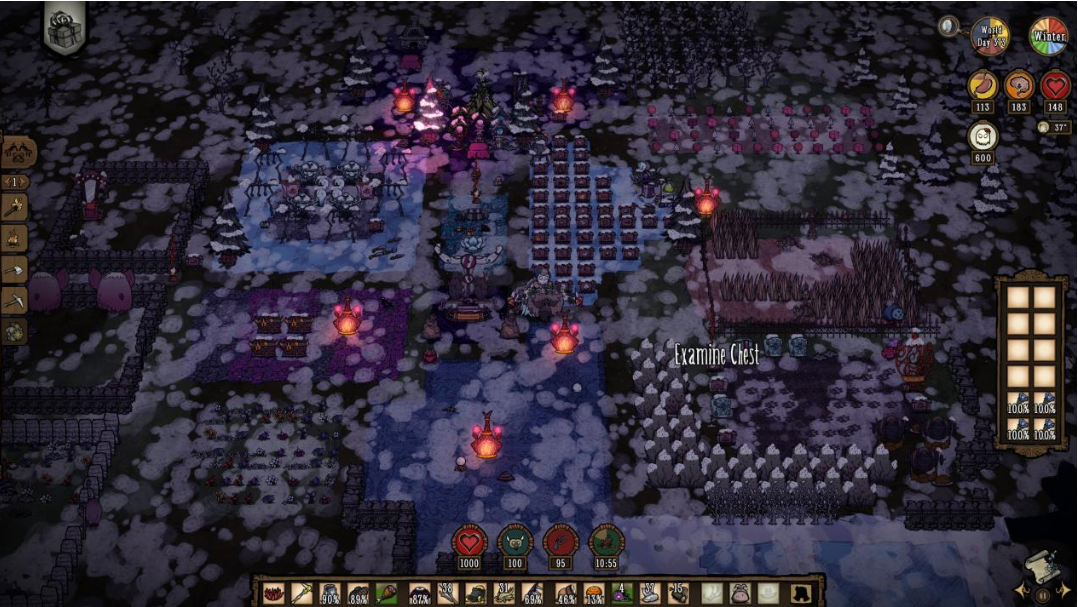
Please admire the kingdom built by the author!
This shift from “just survive” to “maintain stability” to “build a giant base” is one of the most addictive parts of DST, and it feels much more rewarding than playing alone. The mod community also doubles DST’s lifespan. You can add new characters, automation systems, quality-of-life features, higher difficulty, or pure chaos.
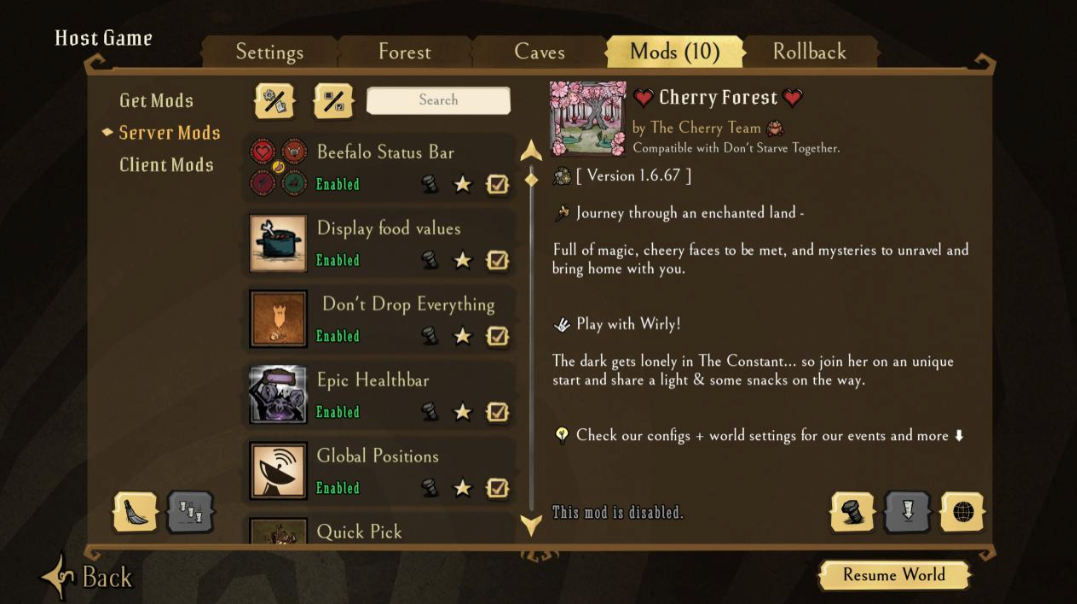
The mod selection screen
The game has basically turned into a small platform ecosystem where players create content and other players use it. The community keeps making the game richer, and honestly, DST has stayed alive this long not only because of the developers, but also because of the players. However, recent updates have dropped in quality, and the biggest example is the character skill trees.
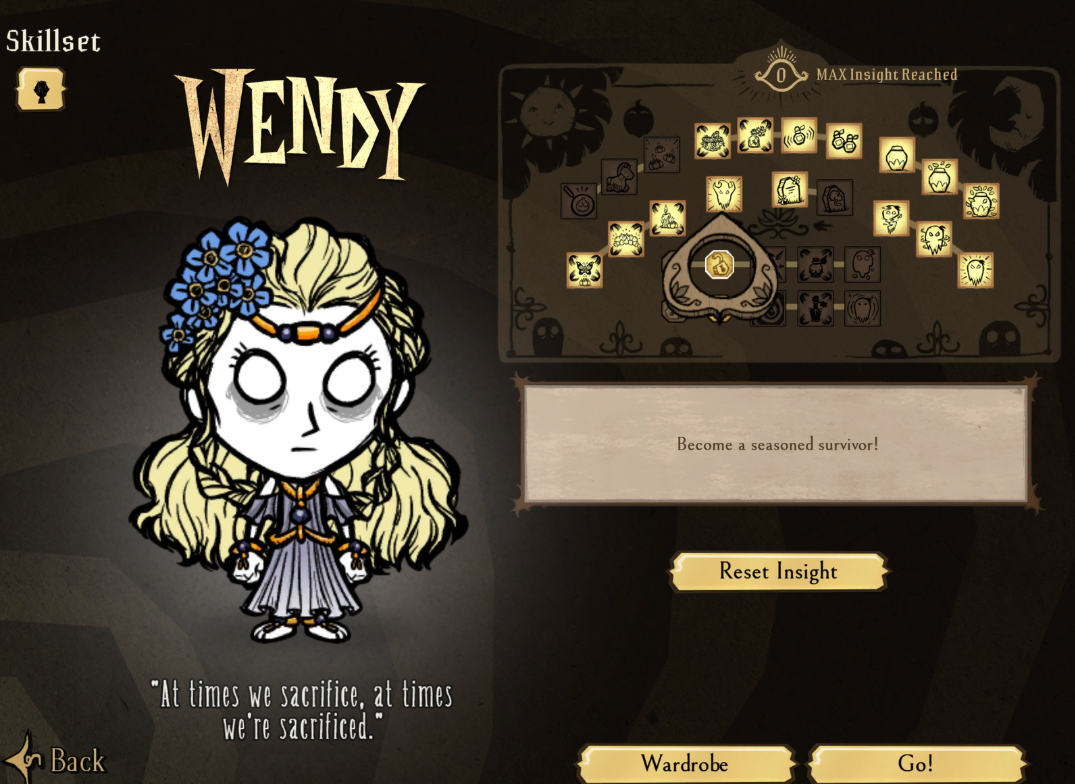
A screenshot of the author’s character skill points
In theory, skill trees should make characters more unique and offer more play styles. In reality, they don’t work like that. Most skills simply give characters more stats and make them stronger in a very straightforward way, without encouraging new exploration or strategies. Some characters become extremely strong within the first ten in-game days, while weaker characters cannot catch up even after four in-game seasons. This kind of imbalance completely breaks the natural difficulty curve of the game.
Even worse, skill points carry over to new worlds, which means starting a new file no longer feels fresh. It becomes a routine with pre-existing buffs. You end up experiencing less content, not more, and the game becomes less challenging, not more interesting. A system that was supposed to increase freedom instead pushes DST toward a simple RPG style numbers grind, moving the game away from its original spirit of exploration.
Even though some of the recent updates can frustrate players, DST is still a very charming and enjoyable co-op survival game. Its core mechanics are strong, player interaction is rich, and the community content is almost endless. But as a long-running game with a devoted player base, it truly deserves higher-quality updates instead of changes that confuse or upset fans. I sincerely hope Klei can put more care into future updates and stop damaging their own great work. DST has huge potential, and as long as the developers don’t ruin it, it will continue to be one of the most addictive and memorable survival games out there.