Written by Yiwen Chi
(Images sourced from Canva are used under Canva’s applicable content licences)
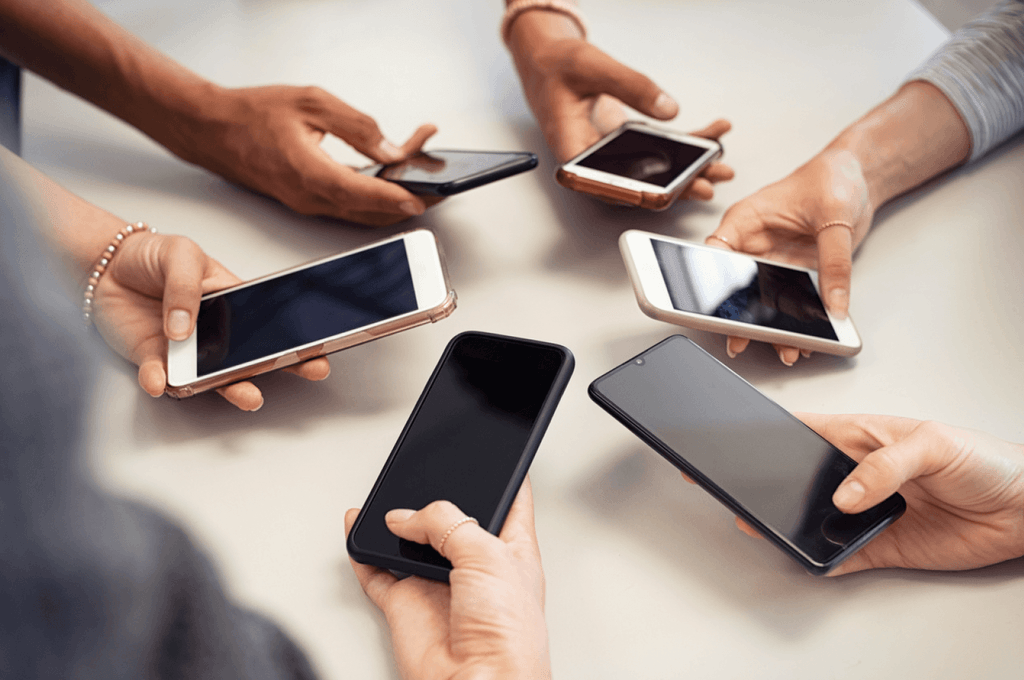
When was the last time you stepped away from the constant and overwhelming flow of information around you? Or perhaps the better question is: when was the last time you truly disconnected from it? It is now difficult to imagine everyday life without smartphones or the internet. For younger generations, smart devices have existed for as long as they can remember, while even those who experienced life before smartphones may have forgotten what that distance from constant connectivity felt like. We have become so accustomed to digital access that we barely notice how much it has changed our relationship with media.
Since the emergence of digital media, the ways culture is created and circulated have changed significantly. I see the smartphone as an important turning point because it transformed internet access from something people had to “go online” to do into something constantly available in everyday life. By making digital media immediate, continuous, and mobile, smartphones have changed not only how people consume popular culture, but also how they participate in it.
One of the most noticeable changes is the role of the audience. In traditional mass media, audiences were mainly recipients of content produced and distributed by media institutions. Digital media has made this relationship more participatory. People can now respond to, share, and reproduce the content they consume, becoming contributors and sometimes producers themselves. Bruns and Schmidt describe this blurred boundary between producer and consumer through the concept of “produsage” (Bruns & Schmidt, 2011).
This can be seen clearly in short-form content such as Instagram Reels and Stories. Users can like, comment on, share, imitate, or respond to posts, so they are no longer simply passive audiences. Almost anyone with a smartphone can contribute something to popular culture. A trend may begin with one person introducing a sound, joke, dance, or visual style, but it develops as others repeat, modify, parody, and redistribute it.
This kind of participation can shape popular culture very quickly. When content resonates with people, they are more likely to share or reinterpret it. As these actions are repeated across large groups, certain styles, ideas, and behaviors become more visible and widely shared. This reflects what Jenkins et al. describe as “participatory culture,” where people do not simply consume media but also take part in creating and circulating it (Jenkins et al., 2006). Popular culture, then, is not simply delivered to audiences; it is constantly reshaped through participation.
Yet this leaves me with another question. If popular culture is increasingly shaped through digital participation, are users really participating on equal terms? Jenkins, Ford, and Green use the idea of “spreadability” to describe how content moves through people’s decisions to share and circulate it (Jenkins et al., 2013). But not everything has the same chance to spread. Platforms still influence what becomes visible and repeatedly shown to users. This makes me wonder whether digital media has truly decentralized cultural production, or whether cultural influence has simply shifted into a different form of platform power.
References
Bruns, A., & Schmidt, J.-H. (2011). Produsage: A closer look at continuing developments.
New Review of Hypermedia and Multimedia, 17(1), 3–7.
https://doi.org/10.1080/13614568.2011.563626
Jenkins, H., Clinton, K., Purushotma, R., Robison, A. J., & Weigel, M. (2006). Confronting the challenges of participatory culture: Media education for the 21st century. The John D. and Catherine T. MacArthur Foundation.
Jenkins, H., Ford, S., & Green, J. (2013). Spreadable media: Creating value and meaning in a networked culture. New York University Press.